Heavy rain and severe windstorms constantly threaten our local utility grid. Losing electricity during freezing weather puts your plumbing at risk. Food spoils quickly when your refrigerator shuts down.
Searching for reliable home generator installation near you provides the exact defense your property needs against blackouts. Flow Tech Heating, AC & Electric designs electrical solutions that activate automatically the moment the grid fails.
Our team assesses your exact energy demands to keep critical systems running. We focus entirely on professional execution to protect your property.
The Core Functions of Automatic Backup Power
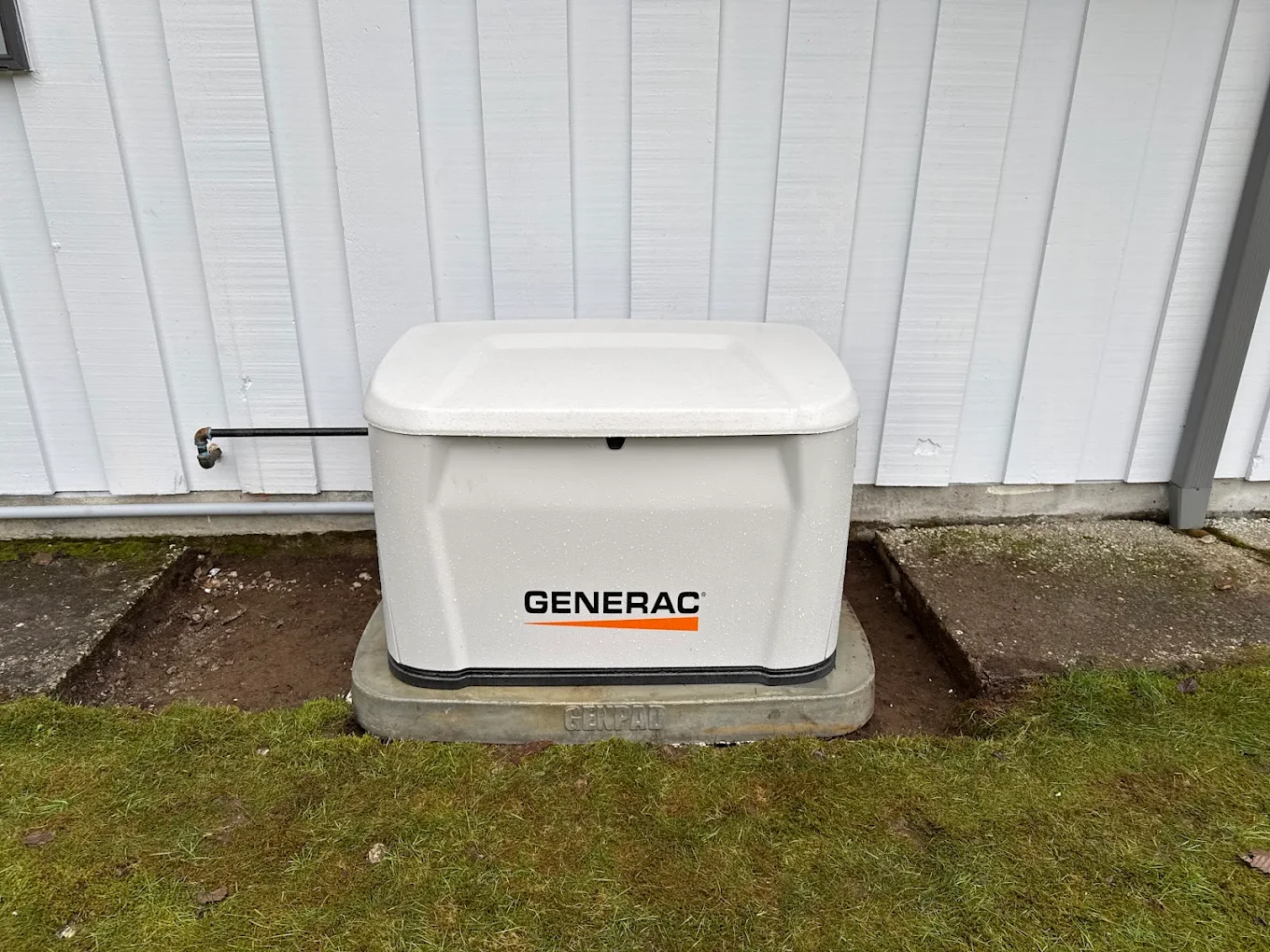
A portable unit requires dragging heavy cables through wet yards in the dark. Standby systems remove that physical hazard entirely by remaining permanently fixed to a concrete pad. Our experts wire these advanced systems directly into your electrical panel.
The automatic transfer switch serves as the central brain of the operation, constantly monitoring the voltage on local utility lines. When it detects a sudden voltage drop, the switch instantly commands the backup engine to start. We install these sensitive mechanisms so your property regains electricity in seconds.
The system simultaneously disconnects your house from the main utility grid. This crucial action isolates your internal circuits from external power fluctuations. Our team configures the sensors to reverse this process the moment city power stabilizes.
Baseline Wattage Requirements for Standard Household Appliances
Property owners must account for both running wattage and starting wattage independently. Failing to calculate the initial starting loads will trip the main breaker immediately. Our team references strict national electrical codes to establish these minimum thresholds.
Kitchen and Refrigeration Systems
- A standard refrigerator requires roughly 700 watts to run but demands up to 2,200 watts to start.
- Electric ovens draw between 2,000 and 3,000 watts of continuous power during heating cycles.
- Microwave ovens consume about 1,000 to 1,500 watts without a surge.
- Deep freezers draw roughly 500 continuous watts and require 1,500 watts to cycle the compressor.
Climate Control Equipment
- A central furnace blower motor needs roughly 800 watts to run and up to 2,500 watts to start.
- Three-ton central air conditioners demand roughly 3,500 watts to run but can spike to 10,000 watts upon startup.
- Standard electric baseboard heaters require a constant load of 1,500 watts per active unit.
General Household Circuits
- Sump pumps require around 1,000 running watts and up to 3,000 starting watts to prevent basement flooding.
- Basic lighting circuits draw a minimal 100 to 500 watts combined across several rooms.
- Dedicated home office setups pull about 300 to 800 watts continuously for computers and monitors.
Our experts use these exact load figures to determine your minimum required unit capacity. We never underestimate your required startup surge thresholds. This rigorous calculation protects your sensitive internal electronics from damaging brownouts.
The Danger of Improper Setup and Fuel Line Connections
Connecting backup power directly to a breaker box is extremely dangerous without professional electrical training. Backfeeding raw electricity into the grid can severely injure utility workers repairing the exterior lines. Flow Tech Heating, AC & Electric pulls the required municipal permits to ensure everything meets local building codes.
Our professionals handle all complex gas pipe fittings to prevent structural hazards. Standby units run continuously on either liquid propane or natural gas. We test every connection point with specialized diagnostic tools to prevent explosive gas leaks.
Trenching and laying underground conduits require heavy machinery and exact depth measurements. Improperly buried lines are susceptible to damage from freezing ground or future landscaping projects. Our team secures all wiring inside rigid conduits to prevent moisture intrusion.
Routine Maintenance for Long-Term Reliability
Mechanical engines sitting idle for months easily develop severe lubrication issues. Lead-acid batteries lose their charge rapidly, and engine oil degrades over time. Our team performs routine operational testing to verify your equipment functions perfectly before a major storm hits.
Regular servicing involves replacing spark plugs and clogged air filters. We check the internal output frequency to confirm the generated electricity remains stable. Flow Tech Heating, AC & Electric handles this technical upkeep so your unit fires up without hesitation.
Ignoring scheduled maintenance vastly increases the risk of engine failure during a crisis. Rodents frequently build nests inside the housing enclosures if the machinery remains ignored. Our professionals clear away debris and inspect the alternator for early signs of mechanical wear.
Further Reading:
- How New 2026 Washington Electrical Safety Requirements Impact Your Home Panel
- Home Cooling Strategies for DuPont and Eatonville Residents This Summer 2026
Defending Your Property Against Unexpected Grid Failures
Harsh weather and failing utility lines pose a constant threat to your daily schedule and structural safety. Flow Tech Heating, AC & Electric provides reliable electrical engineering to keep your lights on when the grid goes dark. Our professionals expertly handle every phase of the complex process from initial load calculation to the final municipal safety inspection.
Call our team today to schedule your professional home generator installation near you.