When a circuit fails, the signs are usually unmistakable. You might hear a sharp crackle, see a brief spark, or smell the metallic tang of overheated wiring. These indicators point to a fault that poses a risk to your property. A short-circuit repair involves more than just swapping a fuse; it requires tracing the specific point where electrical current has escaped its intended path.
When a hot wire contacts a neutral or ground wire, the resulting current flow is strong enough to melt plastic insulation in seconds. This happens because the electricity finds a path with very low resistance, causing the current to spike to dangerous levels instantly. Flow Tech Heating, AC & Electric focuses on finding the exact breach and replacing damaged components before they ignite a fire. Our technicians use specialized diagnostic tools to audit your wiring and ensure your system handles power safely.
Emergency Protocol: What to Do During a Short Circuit
If your home experiences a sudden electrical fault, follow these steps to manage the hazard.
- Locate the problem area. Identify which outlet, switch, or light fixture triggered the event.
- Kill the power. Head to the breaker box and switch the specific circuit to the “Off” position. If you cannot identify the right one, use the main shut-off to darken the whole house.
- Clear the circuit. Pull the plugs on every electronic device and appliance tied to that line. This protects your hardware from further damage.
- Check for heat or charring. Look for brown scorch marks or feel the wall to see if it’s unusually warm. Do not touch any bare wires.
- Call for a professional. Stay safe by leaving the breaker off until a technician confirms the fault is gone.
Internal Failures vs. External Surges
Understanding the difference between a localized short and a grid-wide surge is essential for home safety. A short circuit is typically an internal mechanical failure, often caused by aging wire insulation, loose terminal screws, or even pests chewing through cables behind your drywall.
These issues create “hot spots” that can smolder long after the breaker has tripped. Professional short-circuit repair involves clearing these hazards and verifying that the heat of the initial fault hasn’t compromised the surrounding wires.
On the other hand, surges often come from outside the home. While lightning is the most famous culprit, utility company switching large loads on the grid, or a downed transformer down the street, can send thousands of volts into your home’s outlets. These events happen in microseconds, which is faster than a standard circuit breaker can react. This is why a secondary layer of defense is necessary to protect the sensitive motherboards found in modern appliances.
Installing a Shield Against Grid Instability
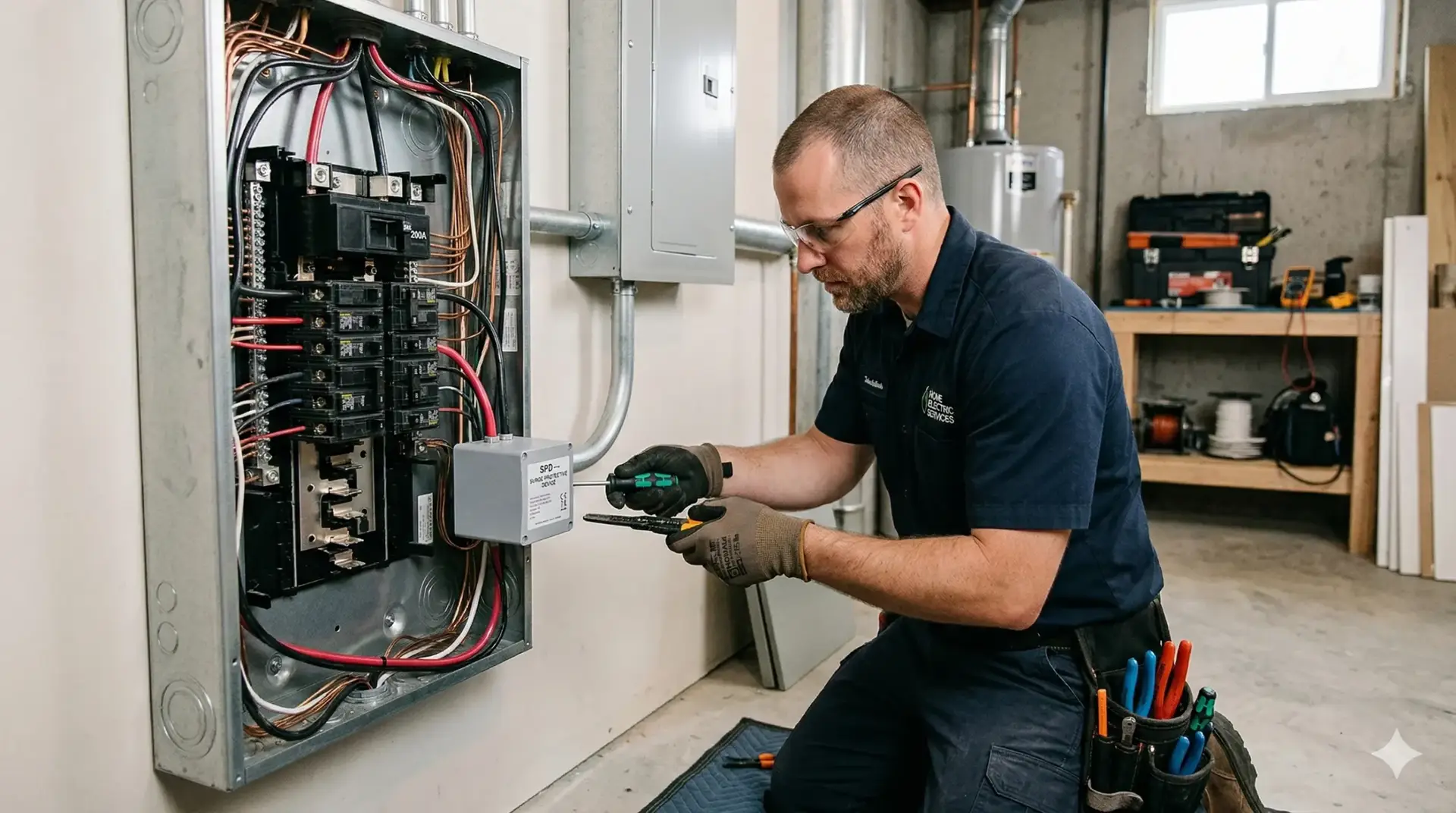
While internal faults are dangerous, external power surges can be equally destructive to your electronics. A whole-home surge protection installation creates a primary line of defense at your main panel. This device monitors incoming voltage and shunts excess energy into the ground before it reaches your kitchen appliances or home office setup. By stopping the spike at the entrance of your electrical system, you provide a blanket of safety that covers every hard-wired device, including your water heater and furnace.
Relying on simple power strips is a gamble when facing a massive voltage spike. Most plug-in strips are designed to handle very small fluctuations and often fail during a significant event. Professional installation ensures that the protective device is properly integrated into your home’s specific electrical load. This setup offers a layer of security for high-value equipment that a standard plug-in strip simply cannot reach.
Preserving Your Digital and Mechanical Investments
Modern electronics contain delicate microchips that cannot survive sudden voltage jumps. A whole-home surge protection installation ensures that your HVAC system, smart appliances, and computers remain functional after a storm or a grid malfunction.
These devices work by “clamping” the voltage to a safe level, allowing your home to maintain a steady power supply even when the external grid is unstable. Our team prioritizes selecting hardware that matches your household’s specific energy demands and amperage.
Our electricians handle the complex task of auditing your grounding system to ensure your defense is effective. Without a solid ground connection, the diverted energy has nowhere to go, rendering the protection useless.
We provide clear explanations of how the protective hardware reacts to a spike and how to monitor its status via indicator lights on the panel. Strengthening your home’s resilience against the local power grid’s unpredictability is a vital step for any modern property.
Reach out to Flow Tech Heating, AC & Electric to resolve your wiring concerns or to schedule a short circuit repairwith an expert.