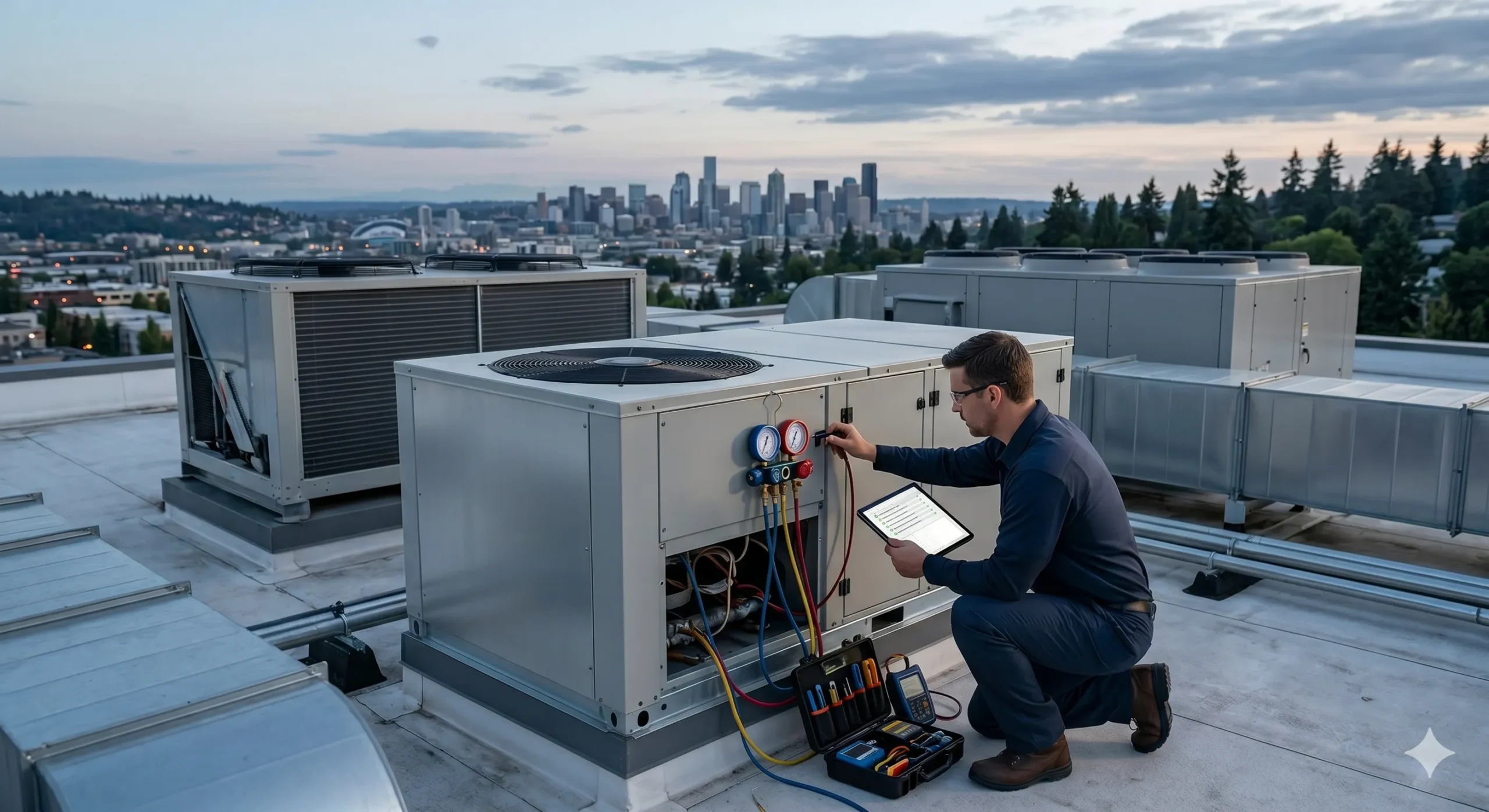
Property managers across Western Washington face specific responsibilities when maintaining commercial buildings during warmer months. Ensuring cooling systems meet regional safety codes helps protect occupants and preserve property value. Working with a qualified HVAC contractor in Tumwater WA, provides the commercial expertise required to review mechanical compliance and system efficiency.
Maintaining large-scale mechanical equipment requires strict adherence to local building regulations and mechanical standards. Building operators must stay informed about regional expectations to prevent operational disruptions and code violations. We focus on delivering reliable cooling solutions with clear communication to assist with these management duties.
Establishing Regional Mechanical Safety Standards
Western Washington building regulations dictate specific operation criteria for cooling systems installed in commercial spaces. These guidelines govern structural installations, electrical connections, and environmental controls to maintain safe indoor conditions. Our certified technicians review these parameters during routine inspections to ensure full alignment with regional mandates.
Mechanical issues can develop silently within complex systems and create unexpected operational risks for commercial properties. Regular oversight helps property managers identify vulnerabilities before they affect building operations or tenant comfort. We offer commercial HVAC diagnostics and maintenance services to address these issues early.
The Commercial Cooling Health Score
To help building operators evaluate their systems, we use a structured assessment framework based on regional compliance codes. This evaluation method provides a clear overview of mechanical safety and operational stability. “The Commercial Cooling Health Score” serves as a five-point safety inspection summary compiled from standard regional HVAC compliance codes.
Building operators monitor the long-term performance of cooling infrastructure through this structured metric. Every assessment category addresses a vital regulatory mandate that requires certified inspection. These specific parameters define the essential elements of our mechanical review.
1. Outdoor Air Intake and Ventilation Management
Commercial codes require a continuous supply of fresh outdoor air to maintain healthy indoor environments for building occupants. Air intakes must remain free from blockages, debris, and localized pollutants to prevent contamination of the building. We inspect dampers and intake screens to confirm proper air volume exchange throughout the cooling cycle.
2. Electrical Distribution and Control Safety
Cooling systems require substantial electrical power and rely on secure wiring, circuits, and panel connections to operate safely. Faulty connections or overloaded circuits can lead to mechanical failure or electrical hazards within the facility. We evaluate electrical components and provide commercial diagnostics to ensure the entire system receives stable power.
3. Refrigerant Containment and Leak Detection
Proper refrigerant levels are necessary for effective heat removal, while leaks pose environmental risks and reduce system efficiency. Regional environmental protocols require regular inspections of cooling lines and coils to detect and patch containment issues promptly. Our team conducts pressure tests and inspections to verify refrigerant stability and regulatory adherence.
4. Ductwork Integrity and Fire Damper Operation
Air distribution networks must deliver conditioned air safely, without leaks or the spread of airborne hazards throughout the property’s structure. Fire dampers within the ductwork must function correctly to isolate air zones in the event of an emergency. We examine duct installations and structural components to verify that airflow paths comply with regional safety designs.
5. System Controls and Emergency Shutdown Fail-Safes
Modern commercial cooling systems depend on accurate thermostats and automated controls to manage temperature settings and safety shutdowns. Emergency stop controls must disconnect system power instantly when triggered to prevent equipment damage or hazardous conditions. We test these control sequences during regular service visits to ensure safety overrides operate perfectly.
Proactive Planning for Property Operations
Managing commercial facilities involves balancing operational costs with regulatory compliance and occupant comfort. Scheduled maintenance programs allow property managers to address cooling requirements systematically without disrupting daily operations. Our approach emphasizes clear communication and upfront pricing to help building operators plan their maintenance budgets effectively.
When system replacements are necessary, obtaining the required local permits ensures the new equipment complies with updated building standards. We manage the permitting process and follow proper installation protocols to ensure long-term mechanical reliability. This attention to detail protects the property investment and ensures ongoing compliance with Washington state codes.
Securing Professional Mechanical Expertise
Large-scale cooling systems demand distinct diagnostic equipment and advanced technical knowledge that differ from residential service needs. Qualified technicians understand the internal mechanics of commercial chillers, heavy-duty heat pumps, and complex distribution networks. We apply deep regional field experience to every commercial mechanical project.
Choosing a licensed, bonded, and insured team provides property managers with clear accountability and reliable project execution. Our service notifications and on-site estimates give building operators documented proof of all maintenance activities. We remain available to help local businesses maintain safe, code-compliant, and reliable cooling systems year-round.
Managing Seasonal Temperature Demands
Western Washington experiences distinct climate shifts that put varying levels of stress on commercial cooling infrastructure. Preparing systems before the peak of summer helps prevent unexpected breakdowns during high-demand periods. Regular filter changes and coil cleaning optimize system airflow and prevent equipment strain.
Inconsistent cooling performance often indicates underlying mechanical restrictions or failing control sensors within the system. Addressing these minor operational changes early prevents minor issues from developing into extensive system failures. We provide comprehensive repair options to restore normal temperature control and maintain consistent building comfort.
Further Reading:
- Optimizing Airflow: Effective Duct Repair and Design
- Generator Tune-Ups This Spring: Don’t Wait for the Next Storm
Ensuring Continuous Mechanical Compliance and Safety
Maintaining commercial cooling safety standards requires consistent oversight and professional mechanical expertise. Implementing structured frameworks, such as our safety inspection summary, helps property managers protect physical assets and building occupants.
Contact our team today for an evaluation with an experienced HVAC contractor in Tumwater WA.