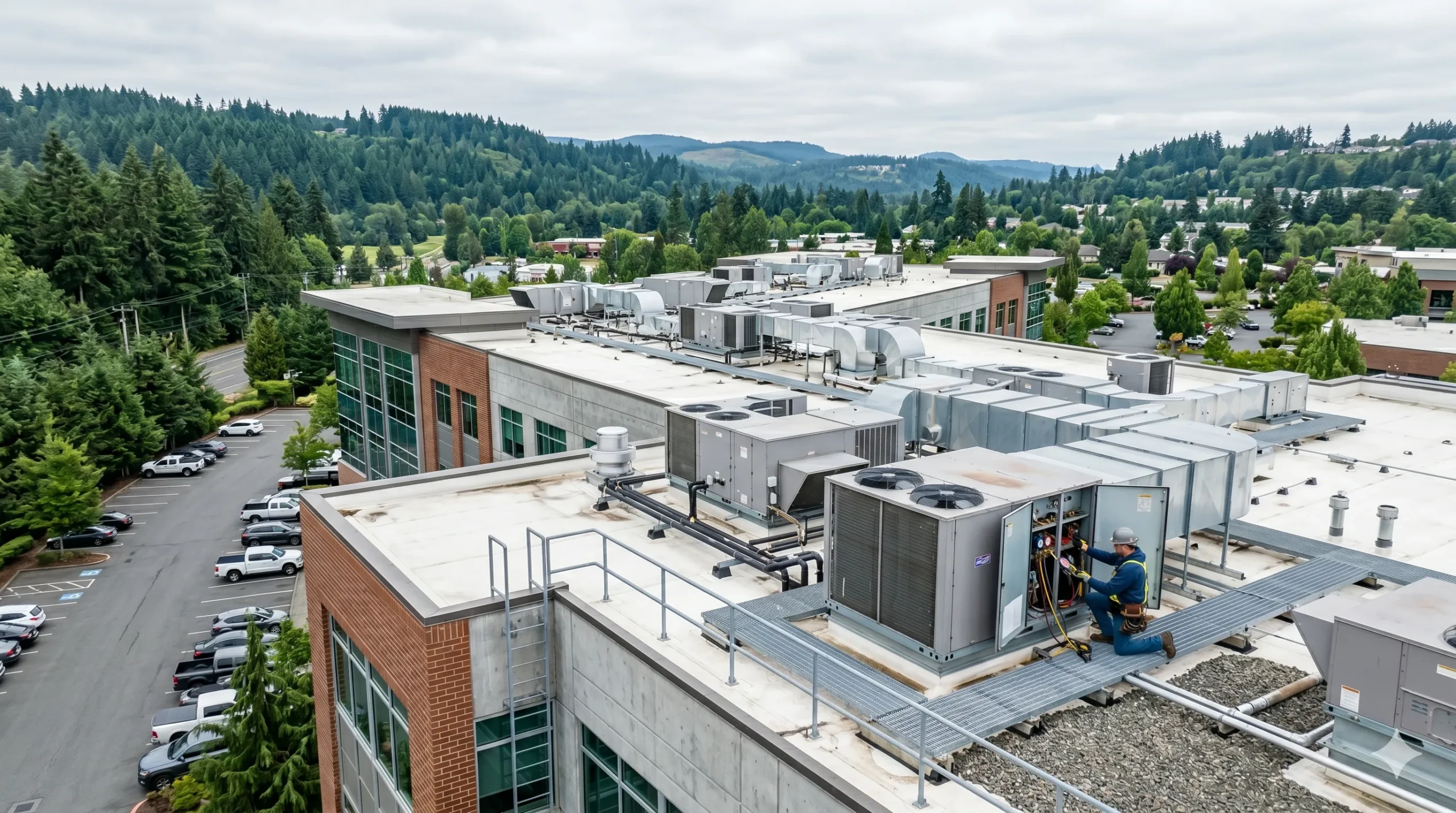
Preparing for the 2026 commercial energy audit requires a clear understanding of how cooling systems will be evaluated. Washington’s updated standards focus on reducing energy use and improving system performance across commercial buildings. Flow Tech Heating, AC & Electric provides HVAC service in Puyallup WA, for businesses to prepare for these changes.
State requirements are shifting how buildings manage climate control. Cooling systems must now operate within defined performance limits tied to overall energy use. We assess your current equipment to identify where adjustments may be needed before inspections begin.
Early preparation helps prevent disruptions and avoid costly corrections later. We review system performance, usage patterns, and infrastructure to ensure your building is aligned with upcoming expectations.
What the 2026 Energy Audit Focuses On
Commercial energy audits are designed to measure how efficiently a building operates. Cooling systems play a major role, accounting for a large portion of daily energy demand. We evaluate how your system performs under typical operating conditions.
Audits often focus on consistency, not just output. Systems that overwork during low occupancy or struggle during peak hours may fall outside acceptable ranges. We help identify these patterns and correct them early.
System age and condition also factor into the evaluation. Older equipment may still function but operate inefficiently compared to newer standards. We outline practical upgrade paths when improvements are necessary.
Flow Tech’s 2026 Commercial Efficiency Checklist
We use a structured checklist to prepare commercial properties for audit readiness. Each checkpoint targets a key factor that affects compliance and system performance.
1. Refrigerant Compliance
We review your system’s refrigerant type to confirm it meets current standards. Older refrigerants may need to be replaced to align with updated requirements.
2. Cooling System Efficiency
We assess how your equipment performs during normal operation. Systems that run longer than necessary or cycle unevenly may require adjustment or replacement.
3. Ductwork and Airflow Integrity
We inspect ductwork for leaks or airflow restrictions. Sealing these areas helps maintain consistent cooling and reduces unnecessary energy use.
4. Electrical System Readiness
We examine panel capacity and wiring to ensure they support modern equipment. Upgrades may be needed to handle increased electrical demand.
5. Control System Optimization
We evaluate thermostats and automation settings to ensure they match building usage. Proper configuration helps maintain stable conditions throughout the day.
Transitioning Toward High-Efficiency Systems
Commercial properties often need to refine the operation of their cooling systems to meet updated requirements. Newer equipment can vary its output to match real-time demand instead of running at a constant level. We evaluate available options to ensure the system fits your building’s layout and daily use patterns.
Heat pump systems are becoming more common in commercial settings. These systems provide both heating and cooling while using less energy than traditional equipment. We ensure proper selection and installation for reliable performance.
Upgrading equipment also simplifies system management. Newer systems often include integrated controls that allow for more precise adjustments. This improves overall efficiency without adding complexity.
Electrical and Infrastructure Considerations
Upgrading cooling systems often requires evaluating the building’s electrical capacity. New equipment may draw more consistent power than older panels can support. We inspect these systems to confirm they are prepared for updated demands.
Our team identifies components that may affect reliability. Replacing outdated panels or wiring helps prevent interruptions and supports consistent operation. These updates are often necessary for full system integration.
Electrical stability also supports modern control systems. Reliable power ensures that sensors and automation tools function correctly. This allows your system to maintain consistent performance throughout the day.
Improving Control Through Zoning and Automation
Zoned cooling lets separate areas of a building be controlled independently. This works well for spaces with changing occupancy or different daily demands. We install zoning setups that help manage energy use while keeping each area comfortable.
Automation tools enable systems to adjust according to schedules. Cooling output can be reduced during off-hours and increased when needed. This helps maintain compliance while controlling energy use.
Monitoring systems provide insight into performance trends. Early alerts allow issues to be addressed before they affect operations. Ongoing tracking supports consistent results during audits.
Maintaining Performance Over Time
Ongoing service plays a key role in keeping systems aligned with performance requirements. We inspect and clean critical components to maintain steady airflow and reliable operation. Systems that receive regular care tend to run more smoothly and use energy more effectively.
We also check for wear on moving parts. Replacing components before failure helps prevent downtime during critical periods. Regular service supports long-term reliability.
Maintenance records can also support audit readiness. Documented service history shows that systems are being properly maintained. This can help during compliance reviews.
Preparing Your Building for What’s Ahead
Meeting 2026 energy standards requires planning, evaluation, and targeted updates. Each building has different requirements based on its size and usage. We provide clear assessments that help guide the next steps.
A structured approach makes it easier to address compliance requirements without disruption. Identifying issues early allows for smoother upgrades and better system performance. Consistent monitoring helps maintain those results over time. Flow Tech Heating, AC & Electric is ready to help you prepare for upcoming changes.
Schedule your HVAC service in Puyallup WA, to ensure your commercial cooling system is ready for an audit.