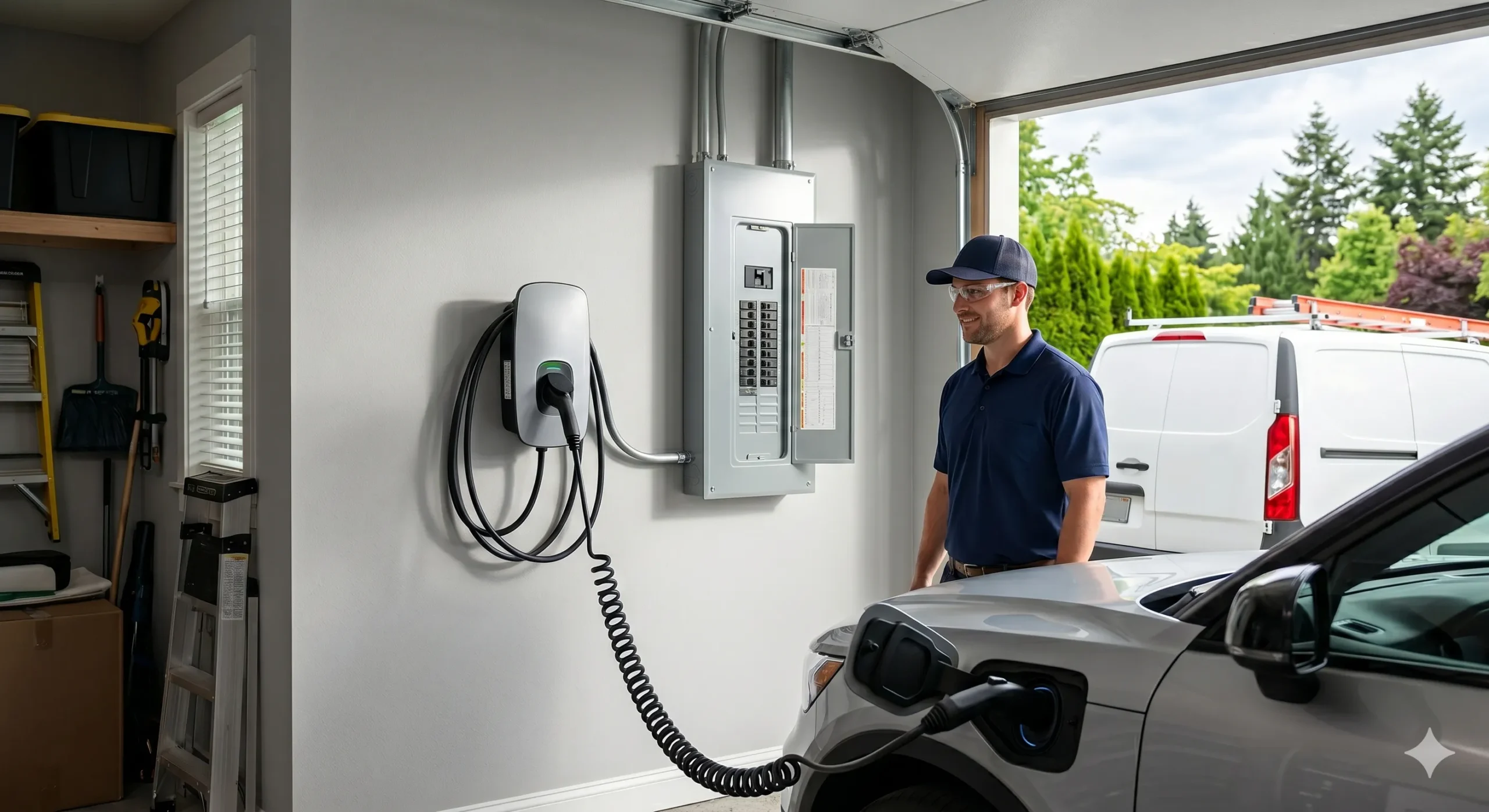
The arrival of June 2026 alters energy consumption patterns for households throughout Western Washington. Preparing for summer travel frequently motivates homeowners to invest in a Level 2 electric vehicle charging station. Booking a professional assessment with an electrician in Gig Harbor ensures that an older electrical system can support this increased power demand without overtaxing it.
Rising summer temperatures increase the reliance on air conditioning systems alongside household appliances. This seasonal shift highlights the importance of evaluating your main electrical panel before adding new high-draw equipment. Properties in Kent and Sumner frequently operate on older electrical setups that limit modern upgrades.
The 200-Amp Readiness Standard Checklist
Western Washington municipal codes outline specific requirements for residential electrical upgrades. Installing a Level 2 electric vehicle charger alongside standard appliances typically requires a transition to a 200-amp electrical panel. We follow this checklist to verify if a residential property meets the necessary infrastructure criteria for safe operation.
Service Panel Capacity and Circuit Space
A standard Level 2 electric vehicle charger requires a dedicated 40-amp or 50-amp double-pole circuit breaker to operate efficiently. The existing electrical box must contain sufficient physical space to house this new hardware without crowding other circuits. If a panel provides less than 200 amps of total service, it generally lacks the capacity to support vehicle charging alongside central cooling systems.
We review the panel labeling and configuration to determine the total amperage currently supplied to the property. Our team assesses whether the current bus bar can safely accommodate the additional load from a fast-charging station. This assessment prevents the installation of equipment on an overloaded or hazardous electrical foundation.
Code-Compliant Clearances and Physical Access
Municipal regulations across Kent, Sumner, and Gig Harbor enforce strict layout rules for main electrical panels. Panels must remain easily accessible and cannot be stored in enclosed spaces such as closets, bathrooms, or tight storage rooms. Maintaining specific clearance zones around the electrical box allows technicians to perform maintenance safely.
We inspect the physical environment surrounding your panel to verify compliance with these regional safety standards. Proper clearance ensures that emergency shut-offs remain unblocked at all times. If the current panel location violates local codes, we address the layout issues during the upgrade.
Grounding and Bonding Systems
Safe vehicle charging depends heavily on an updated grounding system to manage electrical surges. Your home must connect to code-approved grounding rods driven deep into the ground outside the structure. We verify these connections to ensure that any excess current travels safely away from your vehicle and household electronics.
Our inspection includes checking the bonding of the metal piping systems within the home. This comprehensive look at grounding infrastructure protects your property during summer weather shifts or grid instability. Upgraded grounding elements form a vital layer of protection for high-value electrical investments.
Community Specific Infrastructure Realities
Residential developments across Kent often feature homes built during previous decades with original 100-amp electrical services. These older panels struggle to supply sufficient power for modern lifestyles that include electronic devices, multi-zone cooling, and electric cars. Upgrading to a 200-amp configuration provides the modern capacity required for these growing communities.
Properties in Sumner face similar electrical constraints as the summer months approach. Increased demand on local municipal grids means home systems must operate with high internal efficiency. We manage the local permitting process in each city to ensure that panel replacements comply with applicable municipal codes.
Neighborhoods in Gig Harbor frequently present unique home designs that require custom wiring paths for vehicle chargers. Running heavy-duty conduit from a central panel to an exterior driveway or a detached garage requires precise routing. We plan these installations carefully to maintain the aesthetic and structural integrity of your home.
Enhancing Home Power Systems with Whole-Home Protection
Upgrading an electrical panel provides an ideal opportunity to review overall household safety and performance. We offer whole-home surge protection systems that install directly inside your new 200-amp panel. This hardware shields sensitive circuit boards in modern appliances and vehicle charging stations from external voltage spikes.
Summer grid activity can sometimes lead to localized power fluctuations across Western Washington. Standard power strips do not provide sufficient coverage for major appliances or vehicle battery systems. Integrating whole-home surge protection during a panel upgrade helps protect your entire property from unexpected electrical damage.
Our electrical services also include updating interior lighting and circuits to balance power distribution across the home. Dividing high-draw appliances onto separate circuits prevents localized system overloads. This systematic approach improves the long-term reliability of all connected devices throughout the summer season.
Related Articles:
- Claim $1,000 EV Charger Tax Credit Before June 30, 2026
- How New 2026 Washington Electrical Safety Requirements Impact Your Home Panel
Preparing for Summer Electrical Upgrades
Upgrading the capacity of your residential panel and installing dedicated vehicle charging stations helps protect your home from seasonal electrical stress. Our team manages the permitting, inspections, and hardware installation to bring your property into compliance with Western Washington codes.
Schedule an inspection today to ensure your home’s power system receives expert care from a qualified electrician in Gig Harbor.