Winter weather in the Pacific Northwest quickly turns a broken heating system into a major emergency. You might notice cold rooms, sudden banging noises, or a sharp spike in your utility bills. Catching these red flags early allows you to schedule proper Maple Valley furnace repair before your equipment completely fails.
Our experts see these common issues frequently during the coldest months. We know that ignoring small mechanical problems often leads to a total system breakdown. Flow Tech Heating, AC & Electric delivers reliable, prompt service to restore your indoor comfort.
Strange and Loud System Noises
When your heating equipment runs normally, it creates a soft, consistent humming sound. Loud or unusual noises usually point to serious mechanical failures inside the cabinet. You should never open the unit to investigate these dangerous internal sounds yourself.
Our professionals often find loose parts, damaged blower belts, or failing motors during routine inspections. We identify the exact source of the noise and replace the broken components.
- Squealing sounds: This high-pitched noise often indicates a worn-out blower belt or a failing motor bearing.
- Banging or popping: These sudden sounds can signal a dangerous delay in gas ignition or the expansion of metal ductwork.
- Scraping metal: Our team frequently hears a harsh grinding noise when the blower wheel breaks loose and strikes the steel casing.
Flow Tech Heating, AC & Electric has the proper training to diagnose these hazards safely. Our team corrects the mechanical alignment before the loose parts destroy the rest of the heater.
Weak Airflow and Cold Indoor Spots
A healthy heating system pushes warm air evenly into every room of your house. Weak airflow means the system works much harder but fails to maintain the temperature you set. We frequently trace this low pressure to a clogged blower wheel, a dying fan motor, or a crushed air duct.
Your home might also develop stubborn cold spots in certain rooms. This uneven heating forces the unit to run longer cycles. Extended running times put massive strain on the heat exchanger and drive up your monthly energy bills.
Our experts measure the static pressure at your vents to pinpoint exactly where the system loses air. We then clean the blockages or replace the weak motor to restore a strong, warm breeze.
Frequent Cycling and High Energy Bills
A standard heating cycle lasts about ten to fifteen minutes before shutting off. If your unit turns on and off every three minutes, it suffers from a problem called short cycling. This constant stopping and starting damages the internal switches and rapidly burns out the primary motor.
You might also notice an unexplained jump in your winter gas or electric bills. A struggling heater consumes much more energy to produce the same amount of heat. Our professionals review the system components to find out why the equipment is burning excess fuel.
We recalibrate the thermostat and check the flame sensor to stop the short cycling. Flow Tech Heating, AC & Electric ensures your system runs efficiently so you stop overpaying your utility company.
Unpleasant Odors and Poor Air Quality
Your heating vents should only blow clean, odorless air into your living spaces. Strange odors serve as a major warning sign of internal damage or safety hazards. A faint burning-dust smell is normal on the first cold day, but melting-plastic odors are a clear emergency.
Raw gas smells or sulfur odors indicate a highly dangerous fuel leak. Our experts advise homeowners to shut off the system immediately and leave the house if they smell gas. We respond quickly to secure the gas line and fix the cracked valves.
A failing heater can also push excessive dust and debris into your indoor air. Our team inspects the filtration system and seals the ductwork to keep your indoor environment healthy.
Official Operating Standards and Performance Thresholds
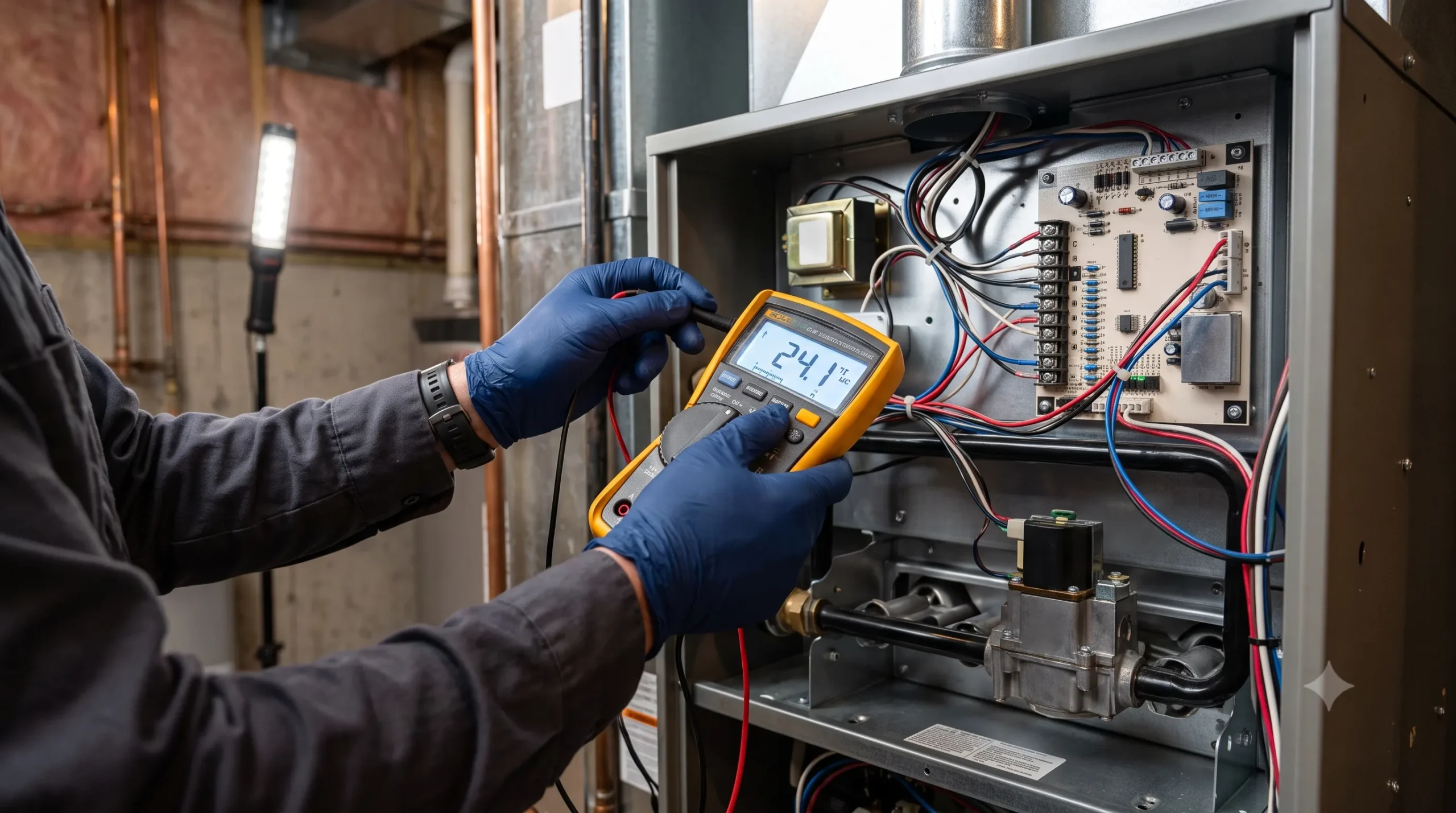
Modern HVAC systems follow strict mechanical rules to operate safely and correctly. When your unit falls outside these standard industry limits, your energy costs rise, and the risk of carbon monoxide exposure increases. Flow Tech Heating, AC & Electric uses precise diagnostic tools to check these exact mechanical details.
- Gas Pressure Limits: Natural gas heaters require a steady manifold pressure, typically measuring between 3.2 and 3.5 inches of water column (WC).
- Safety Switch Temperatures: The high-limit safety switch must trigger an automatic shutdown if internal cabinet temperatures exceed 170 to 200 degrees Fahrenheit.
- Temperature Rise: The hot air leaving your vents should measure exactly 40 to 70 degrees warmer than the cold return air entering the system.
- Carbon Monoxide Output: Exhaust gases must contain less than 100 parts per million (PPM) of carbon monoxide before venting safely outdoors.
Our professionals verify these exact measurements during every single repair visit. We ensure your system meets these strict factory rules so you avoid costly utility waste and dangerous safety hazards.
Further Reading:
- Essential Heating and Cooling Solutions for Your Pierce County Home
- Defending Your Home Against Electrical Faults and Power Spikes
Secure Your Winter Heating Reliability
Ignoring strange noises or weak airflow will eventually leave your house freezing in the middle of winter. Our team delivers fast, effective solutions that protect your expensive heating equipment from early failure.
Keep your family warm and safe by scheduling your Maple Valley furnace repair today.